
2026 Best Soda Can Suppliers for Global Buyers?

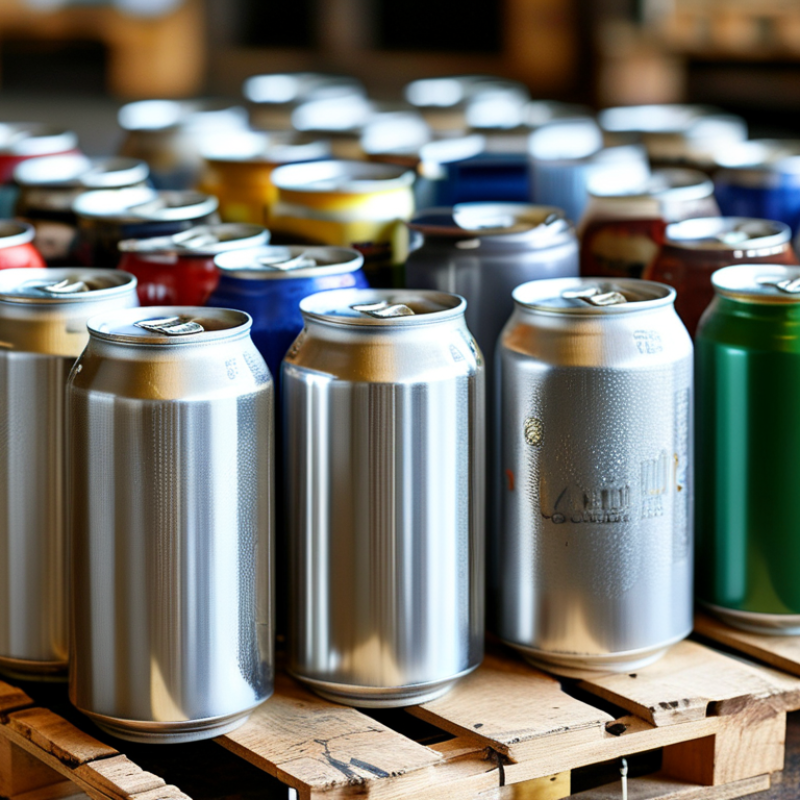
Choosing among the 2026 Best Soda Can Suppliers for Global Buyers requires more than comparing prices. A reliable supplier must deliver consistent dimensions, safe coatings, strong seams, and traceable materials. These details protect filling lines, product quality, and customer trust.

Robert Budway, President of the Can Manufacturers Institute, has stated, “The aluminum beverage can is the most recycled package in the world.” His observation highlights an important purchasing factor. Buyers should examine recycled aluminum content, collection systems, energy use, and supplier disclosures. Sustainability claims need evidence, not attractive slogans.

This introduction examines suppliers through practical criteria. It considers can sizes, neck profiles, wall thickness, printing quality, pallet protection, and production capacity. It also reviews food-contact documentation, quality certifications, factory audits, and export experience. A supplier may offer excellent prices but still struggle with port delays or inconsistent batch control. That matters.

Global buyers should request recent test reports and physical samples. Check the rim carefully. Inspect the print under direct light. Ask how the supplier handles damaged pallets, recalls, and demand changes. These steps reveal operational maturity.

Regional requirements can also differ. Packaging rules, recycling targets, labeling expectations, and import procedures may affect the final choice. Professional sourcing therefore requires local verification and documented communication. Even experienced buyers can miss small specifications. That is the uncomfortable part.

The best Soda Can supplier is not always the largest manufacturer. It is the partner that combines dependable production, transparent evidence, responsive service, and realistic delivery commitments. This guide offers a practical starting point, while acknowledging that supplier performance must be verified before long-term contracts.
2026 Best Soda Can Suppliers for Global Buyers?

Define the Product: 330 mL, 355 mL, 473 mL, and 500 mL Can Formats

Choosing a soda can supplier starts with defining the exact format. A 330 mL can fits compact servings and vending channels. The 355 mL format remains familiar in many international markets. A 473 mL can supports larger portions, while 500 mL suits convenience retail and extended consumption. These sizes are not interchangeable. Each requires matching ends, lids, labels, cartons, and filling settings.

Ask suppliers for technical drawings before comparing prices. Check can diameter, height, empty weight, wall thickness, internal coating, and seam specifications. The filling line must accept the proposed dimensions without frequent adjustments. Confirm compatibility with carbonated beverages, pasteurization conditions, and storage temperatures. Request production samples, inspection reports, and batch traceability. Photos are useful, but physical samples reveal more.

Do not judge capacity alone. Pallet efficiency, shipping space, and local consumer habits can change the real cost. A taller 500 mL can may improve shelf impact but reduce carton stability. A 330 mL can may lower portion size but increase unit packaging costs. Small details matter. I would also question unclear tolerances, delayed sample revisions, and inconsistent coating information. One supplier may offer an attractive quotation, yet weak documentation creates avoidable risk. A careful buyer should compare total delivered performance, not only the price per thousand cans. The specification may still need revision after a factory trial. That is normal.

2026 Best Soda Can Suppliers for Global Buyers: Standard Can Formats

This chart compares four widely used soda can fill formats: 330 mL, 355 mL (12 US fl oz), 473 mL (16 US fl oz), and 500 mL. Actual can dimensions may vary by manufacturer, but these nominal capacities are common references for international beverage packaging and sourcing decisions.

Screen Suppliers by ISO 9001, FSSC 22000, and Food-Contact Compliance

2026 Best Soda Can Suppliers for Global Buyers?

Screen Suppliers by ISO 9001, FSSC 22000, and Food-Contact Compliance

Global buyers should screen soda can suppliers beyond price, capacity, and delivery promises. ISO 9001 shows whether documented quality controls guide production. Request the certificate, certification scope, expiry date, and audited factory address. The certificate must cover can manufacturing, not only an unrelated office or trading company.

FSSC 22000 adds stronger food-safety controls. Review hazard analysis, supplier management, sanitation records, and traceability exercises. Ask how quickly the supplier can identify affected batches using a production code. A practical test is simple: choose one pallet and request its aluminum coil, coating, inspection, and shipment records. Weak suppliers often provide vague answers.

Food-contact compliance requires closer technical review. Request declarations of compliance for aluminum, internal coatings, sealants, inks, and recycled content. Check migration test reports against the destination market’s requirements. Confirm the testing laboratory, test conditions, sample description, and report date. Do not accept a generic “food safe” statement. It lacks useful evidence. Can-end coatings may perform differently after filling, pasteurization, storage, and transport. That detail is easy to overlook. A supplier with strong documents can still fail through poor change control. Therefore, ask how it approves new raw materials, manages complaints, and communicates process changes. No screening method is perfect, but documented evidence exposes avoidable risks.

2026 Best Soda Can Suppliers for Global Buyers? — Screen Suppliers by ISO 9001, FSSC 22000, and Food-Contact Compliance

This screening table uses anonymous supplier profiles rather than company or brand names. Certification status must be confirmed with a current certificate, certification-body details, site address, scope, expiry date, and product-specific food-contact documentation before purchase.

Supplier Profile Typical Manufacturing Region Common Soda Can Formats ISO 9001 Screening FSSC 22000 Screening Food-Contact Compliance Evidence Quality and Technical Controls Global-Buyer Fit Screening Score Buyer Verification Status
Supplier Profile 01
Large integrated can-making operation
East Asia Aluminium two-piece cans in 250 ml, 330 ml, 355 ml, and 473 ml formats; standard 202 beverage ends commonly available. Required and current
Verify certificate scope for can-body, end, coating, and packaging production sites.
Preferred
FSSC 22000 Version 6 certificate should cover the relevant food-packaging manufacturing site.
Request coating and ink declarations of compliance, migration-test reports, and confirmation of intended use for carbonated beverages. Look for statistically controlled body-wall thickness, dome-pressure testing, seam inspection, coating-weight control, and lot traceability. Strong fit for high-volume export programs requiring several standard can sizes and coordinated regional logistics. 9.2/10 Shortlist after document audit
Supplier Profile 02
Regional aluminium packaging specialist
Southeast Asia 330 ml and 355 ml slim or standard beverage cans; selected 250 ml and 473 ml formats subject to tooling availability. Required
Confirm that the certificate applies to the exact manufacturing address and product category.
Recommended
Acceptable only when the food-packaging scope is clearly stated and surveillance audits are current.
Request evidence aligned with applicable destination-market rules, such as EU Regulation 1935/2004, EU GMP Regulation 2023/2006, or U.S. FDA requirements where applicable. Check can-end compatibility, internal lacquer performance, seam teardown results, pallet protection, and humidity or transport testing. Good fit for buyers seeking competitive pricing, flexible minimum order quantities, and Asia-Pacific delivery. 8.6/10 Conditional shortlist
Supplier Profile 03
European export-focused packaging plant
European Union Standard 330 ml, 355 ml, 440 ml, and 500 ml aluminium beverage cans; printed and plain options may be available. Required and current
Prioritize certificates issued by an accredited certification body with a matching site and scope.
Preferred
FSSC 22000 certification can strengthen supplier approval for food and beverage packaging applications.
Request EU food-contact declarations, specific migration data where relevant, GMP records, coating specifications, and statements covering recycled-content controls if claimed. Review dimensional tolerances, seam integrity, internal-coating continuity, decoration controls, nonconforming-product procedures, and recall traceability. Strong fit for European distribution, regulated-market documentation, and buyers prioritizing traceability over lowest unit cost. 9.0/10 Shortlist after technical approval
Supplier Profile 04
North American beverage-can producer
North America Standard 12 fl oz equivalent, 16 fl oz equivalent, sleek, and selected specialty can formats; exact availability depends on plant tooling. Required
Verify the certificate against the production site, quality-management scope, and current audit cycle.
Recommended
Confirm whether the plant holds FSSC 22000 or another recognized food-packaging certification accepted by the buyer.
Request documentation for U.S. food-contact requirements, including applicable FDA regulations for metal, coatings, adhesives, and printing components. Evaluate seam-quality data, pressure and leak testing, pallet configuration, transport damage controls, and compatibility with the buyer's filling line. Good fit for buyers serving the United States or Canada and requiring domestic supply continuity. 8.8/10 Verify market-specific documents
Supplier Profile 05
Flexible mid-sized contract supplier
South Asia Common 250 ml, 330 ml, and 500 ml formats; custom graphics and nonstandard sizes may require minimum-volume commitments. Verify before RFQ
Do not accept a generic corporate certificate that excludes the actual can-manufacturing site.
Evidence required
Request a valid FSSC 22000 certificate or an equivalent recognized food-packaging audit report.
Obtain product-specific declarations, migration reports, raw-material approvals, coating technical data sheets, and destination-country compliance statements. Audit incoming-material controls, coating cure validation, seam inspection frequency, complaint handling, batch coding, and change-control procedures. Potential fit for private-label and developing-market projects when the buyer can conduct an on-site or third-party audit. 7.7/10 Pilot order and audit required
Supplier Profile 06
Low-volume specialty-format supplier
Middle East and North Africa Selected 250 ml, 330 ml, and 355 ml formats; specialty finishes may be available with longer lead times. Verify scope
Confirm whether quality controls cover both plain and decorated cans.
Preferred for approval
Require food-packaging certification or a documented third-party audit before commercial launch.
Request destination-specific food-contact declarations, coating and ink approvals, migration testing, and evidence for halal or local regulatory requirements when applicable. Check export packaging, heat exposure controls, corrosion protection, seam performance after filling, and container-load stability. Suitable for regional distribution, trial launches, and differentiated formats when supply-chain risk is actively managed. 7.9/10 Regional qualification required

Recommended approval rule: treat ISO 9001 as evidence of a quality-management system, not as proof of food-contact safety. Require separate food-packaging controls, current FSSC 22000 or equivalent certification where specified, and product-specific food-contact documentation for the destination market.

Compare Can Materials: Aluminum Alloys 3104/3004 and 0.09–0.12 mm Walls

For global buyers, “best” soda can suppliers should prove alloy consistency, gauge control, and recycled-content traceability. Aluminum 3104 remains a common body alloy because manganese and magnesium support strength after forming. Alloy 3004 is also used in can components, especially where balanced formability and strength matter. The Aluminum Association’s Aluminum Standards and Data lists both as established wrought-alloy grades. Procurement teams should request mill certificates, not rely on alloy names alone. Certificates should show chemistry, temper, tensile data, and lot identification.

The 0.09–0.12 mm body-wall range saves metal, yet it narrows the process window. At 0.09 mm, small gauge variation can affect dent resistance, flange geometry, or buckle performance. At 0.12 mm, the can may feel safer, but material use and shipping weight rise. Can Manufacturers Institute publications describe decades of lightweighting in beverage packaging. Exact targets still depend on diameter, height, tooling, and internal pressure. Ends are normally thicker than bodies. Compare component drawings, not one headline thickness.

International Aluminium Institute statistics report more than 70 million tonnes of primary aluminium production globally in 2023. That scale makes traceability important. Recycled-content claims need chain-of-custody evidence and clear calculation boundaries. I would sample incoming coils, check thickness across the strip, and run forming trials before approval. Do not skip this. A supplier may meet 3104 chemistry yet miss surface cleanliness or lubrication control. The practical question is which mill holds 0.09–0.12 mm reliably, shipment after shipment. Even that needs review when line speed changes.

Evaluate Supplier Capacity, MOQ, Lead Time, and Leak-Test Coverage

For global buyers, choosing a soda can supplier requires more than checking unit price. Supplier capacity should match your seasonal demand, not just your average forecast. Ask for monthly output, line availability, and recent production records. A factory producing millions of cans may still struggle during holiday peaks. Request evidence, not broad assurances.

Minimum order quantity affects cash flow and storage. Confirm whether MOQ applies per size, finish, or shipment. Lead time should include material purchasing, production, inspection, and export handling. A quoted 20-day schedule may exclude port delays. That gap matters.

During supplier audits, review sample cans, pallet protection, and batch traceability. Leak-test coverage also deserves precise questions.

Does testing cover every can, random samples, or only finished batches? Ask for the test method, pressure settings, sampling frequency, and corrective-action records. Small defects can become wet cartons and rejected shipments.

Tips:

  • Build a capacity table for normal and peak months.
  • Compare MOQ with your warehouse limits.
  • Request a written lead-time breakdown.
  • Test cans after transport simulation, not only at the factory.
  • Check seam dimensions, dents, and coating quality.

I have seen buyers trust polished samples too quickly. That is a weak assumption. Supplier claims can change when orders increase. Keep a trial shipment, inspect it independently, and leave room for honest revision.

Rank Global Suppliers by Cost, Recycled Content, Logistics, and Quality Data

2026 Best Soda Can Suppliers for Global Buyers?

For 2026 sourcing, I rank suppliers across four practical measures: cost, recycled content, logistics, and quality data. Integrated regional producers usually rank first for delivered cost. Their plants sit near filling markets, reducing ocean freight and emergency inventory. However, their recycled aluminum share can vary by contract and production month. Ask for batch-specific declarations, not broad website claims.

Recycled-content specialists rank higher when sustainability targets matter. They may provide smelter records, chain-of-custody documents, and third-party verification. The price is often less predictable. A lower material footprint can still create higher landed costs. Request quotations using identical can sizes, alloy grades, coatings, pallet patterns, and delivery terms. Small differences distort comparisons.

Low-cost exporters can rank third, especially for large, stable orders. Their factory prices may look attractive, but ports, customs handling, and longer lead times add risk. I would check seam strength, internal coating results, dimensional tolerances, and defect rates from recent lots. Quality data must include test dates and sampling methods.

Supplier audits should also review traceability, food-contact controls, and corrective-action records. This ranking is not perfect. Freight rates change quickly, and recycled-content claims need repeated verification. A supplier that performs well in one region may disappoint elsewhere. Short trials are worth the extra work.

Back to top