What is a geomembrane welding machine and how does it work?
The geomembrane welding machine plays a crucial role in various industries, including construction and environmental protection. According to market analyses, the geomembrane market is projected to reach approximately $3 billion by 2025, highlighting the growing demand for reliable and efficient welding machines. This growth reflects the increasing applications of geomembranes in landfill liners, water reservoirs, and mining operations.
These machines utilize advanced technology to create strong, durable seams in geomembranes. The welding process is essential to ensure impermeability, which is vital for protecting natural resources. However, the quality of welding can be inconsistent, leading to leaks or failures. Manufacturers emphasize the importance of training operators to minimize these risks.
Despite technological advancements, challenges remain in the geomembrane welding process. Variations in temperature and pressure can affect seam integrity. Regular maintenance of the welding machine is crucial to ensure optimal performance. Addressing these imperfections can significantly enhance the application outcomes across numerous sectors, reinforcing the value of the geomembrane welding machine in modern practices.
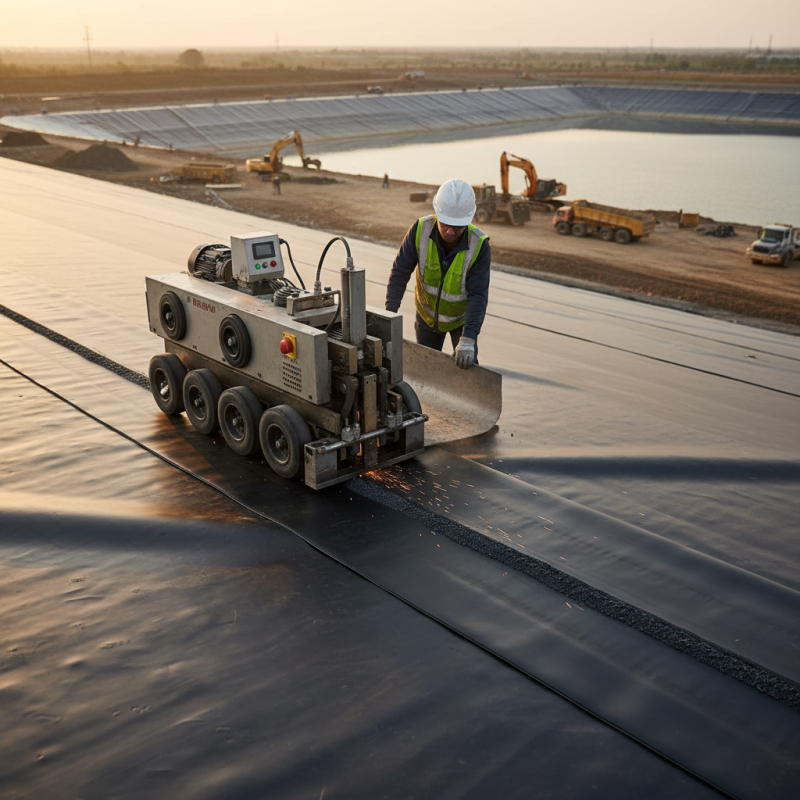
What is a Geomembrane Welding Machine?
A geomembrane welding machine is a specialized device designed to bond synthetic membranes used in various applications. These membranes often serve as barriers in landfills, reservoirs, and containment ponds. The welding process creates seams that are critical for preventing fluid leaks.
The machine operates by applying heat and pressure to two overlapping layers of geomembrane. It can use different techniques, like hot air welding or extrusion welding, depending on the project requirements. The operator must be skilled to ensure proper bonding, as any mistakes can lead to significant issues down the line.
**Tips:**
Always check the machine’s settings before starting the process. Make sure the temperature is optimal for the material you are using. Practice on scrap materials first. This can save time and resources.
It’s essential to conduct regular maintenance on the welding machine. An uncalibrated machine can produce weak seams, risking project integrity. Keep an eye out for wear and tear on the welding components.
Effective training for operators cannot be overlooked. It’s vital to understand the specifics of the material being welded. Every application can present unique challenges, which require careful consideration and adaptation.
Key Components of a Geomembrane Welding Machine
A geomembrane welding machine is essential for creating waterproof barriers in various applications. The machine uses heat and pressure to join membranes made from materials like high-density polyethylene (HDPE) or polyvinyl chloride (PVC). Understanding its key components reveals why it is vital for construction and environmental projects.
One critical component is the welding tool. This device generates controlled heat, enabling precise welding. Another essential part is the pressure roller. It applies consistent pressure to ensure a tight bond between the geomembranes. Data shows that over 75% of project failures occur due to poor seams. Thus, reliable results hinge on these components.
The control system also plays a role. Modern machines now have digital interfaces allowing operators to monitor heat and pressure in real-time. Reports indicate that incorporating advanced technology can reduce seam failure rates by up to 40%. However, operators must be well-trained to handle these systems effectively. Sometimes, a lack of training leads to mistakes during the welding process, impacting project outcomes. This highlights the importance of both machine components and skilled labor in geomembrane installation.
Types of Welding Techniques Used in Geomembrane Welding
Geomembrane welding is essential for creating durable water and waste containment systems. Several welding techniques are utilized in this field. The most common methods include hot air welding, extrusion welding, and wedge welding.
Hot air welding involves blowing hot air onto the geomembrane surfaces. As the surfaces soften, they are pressed together. This method is effective, yet requires precise temperature control. According to industry reports, improper temperature settings can lead to weak seams, reducing overall integrity by up to 30%.
Extrusion welding uses a filler material to enhance joint strength. The filler is heated and then applied between two geomembrane sheets. This method is great for thicker materials. However, it can be inefficient. Time losses may occur if the machine isn't calibrated correctly.
Wedge welding uses a heated wedge to join the edges of geomembranes. It offers strong, consistent seams but can be tricky on uneven surfaces.
**Tip:** Always perform a visual inspection before starting to ensure the seam quality.
Using a suitable welding technique transforms geomembranes into reliable barriers. Each method has advantages and inherent challenges. Understand which technique best suits your project’s needs.
**Tip:** Monitor environmental conditions like wind and humidity. These factors can significantly affect welding quality.
The Process of Operating a Geomembrane Welding Machine
Operating a geomembrane welding machine requires precision and care. Users must first prepare the geomembrane sheets by ensuring they are clean and free from debris. This step is crucial to secure a solid bond between the sheets. After preparing, the operator sets the machine to the correct temperature, usually between 300°F to 400°F, depending on the material being welded.
As the welding machine moves along the seam, it employs heat and pressure to fuse the geomembranes together. It’s important to monitor the speed of the machine, as too fast can lead to weak joints. Conversely, too slow may burn the material. Operators often face challenges in adjusting these settings, which can lead to imperfections. Observing the weld appearance is essential for quality control.
Understanding the nuances of machine operation can be complex. Experienced operators sometimes overlook small adjustments, resulting in inconsistent weld quality. Continuous practice and attention to detail are key. It’s not only about achieving a fast weld but also about ensuring longevity and durability. Many find themselves reflecting on their techniques after each project, striving for improvement.
What is a geomembrane welding machine and how does it work? - The Process of Operating a Geomembrane Welding Machine
| Feature | Description |
| Type of Welding | Hot Wedge Welding, Extrusion Welding, and Radio Frequency Welding |
| Common Applications | Landfill liners, pond liners, tunnel liners, and temporary dams |
| Materials Used | HDPE, LDPE, LLDPE, PVC, and EPDM |
| Advantages | Durability, leak prevention, environmental protection, and cost-effectiveness |
| Operating Temperature | Usually between 400°F to 500°F (204°C to 260°C) |
| Welding Speed | Varies between 1 to 4 meters per minute, depending on the material |
| Control Mechanism | Digital control panels with adjustable speed and temperature settings |
Applications and Benefits of Geomembrane Welding Machines
Geomembrane welding machines are essential in various industries. They are primarily used for installing geomembranes in applications such as landfill liners, pond liners, and water containment systems. These machines provide a reliable method for creating robust seams. According to industry reports, the global geomembrane market is projected to reach $3 billion by 2027, reflecting a growing need for effective containment solutions.
In construction, geomembrane welding offers numerous benefits. It ensures high-quality seals that prevent leaks in critical environments. With machines using hot wedge and extrusion welding methods, productivity increases significantly. However, flaws in welds can lead to contamination. A study found that nearly 30% of geomembrane failures result from inadequate welding practices. Thus, regular training and adherence to industry standards are necessary for optimal results.
The agricultural sector also benefits from geomembrane technology. Farmers use welded geomembranes for irrigation and soil protection. Recent surveys indicate that around 40% of agricultural businesses are adopting these methods. Increased efficiency in water usage can lead to cost savings. Yet, improper installation remains a concern. Monitoring and quality checks are crucial to mitigate potential issues effectively.