
Global buyers are reassessing how bulk materials move, breathe, and arrive. Permeable Bulk Bags offer a practical answer for products needing airflow, controlled ventilation, or reduced condensation. Their woven polypropylene structure can support agricultural goods, minerals, wood pellets, and other dry materials when correctly specified. However, permeability is not a universal quality. It must match the product, climate, filling process, and storage period.
Industry data supports this growing focus. Grand View Research’s Flexible Intermediate Bulk Container market analysis forecasts steady expansion through 2030, driven by agriculture, chemicals, construction, and food processing. Smithers’ flexible packaging research also highlights lightweight transport formats and material efficiency as continuing purchasing priorities. These reports point toward growth, but market definitions differ. That detail matters.
A reliable comparison should examine fabric airflow, liner compatibility, safe working load, lifting loops, seam design, and UV performance. ISO 21898 provides a useful reference for FIBC construction and performance requirements. In practical sourcing, a bag may look strong on a warehouse floor yet fail after humid ocean transit. Small details matter. Vent patterns, stitching density, and moisture barriers can change the outcome.
This guide evaluates the top Permeable Bulk Bags for global buyers through performance, application fit, supplier consistency, and documentation. No bag is perfect. Buyers still need product trials, test certificates, and clear loading instructions. The strongest choice is not always the cheapest bag. It is the bag that protects the material from filling line to final unloading.
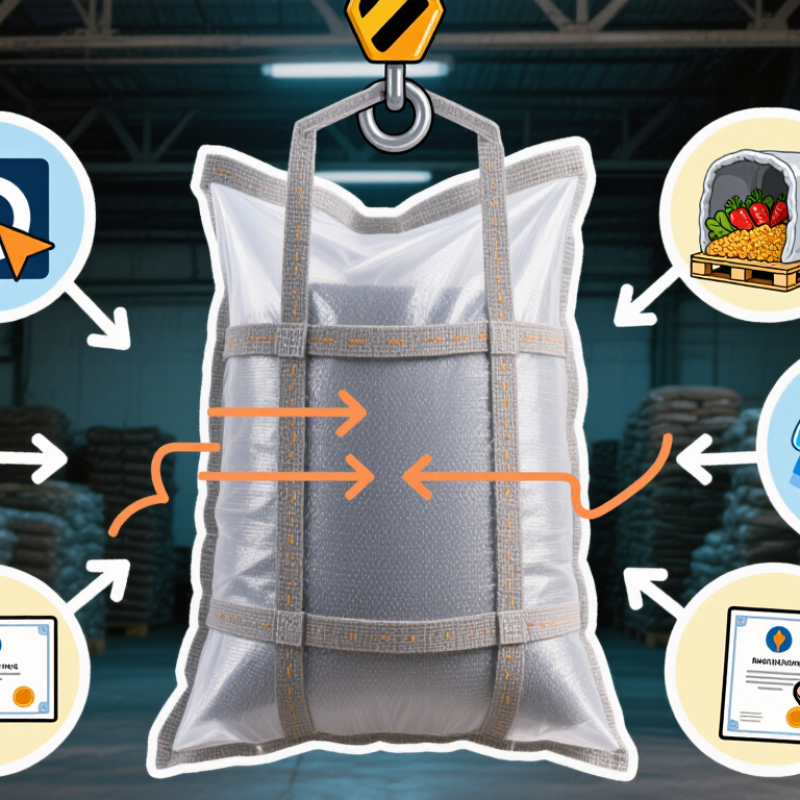
Permeable FIBCs are practical for buyers moving dry agricultural, mineral, and granular products that need airflow. Their woven polypropylene fabric allows ventilation, but it does not provide waterproof protection. A rain cover or liner may still be necessary.
Under ISO 21898, buyers should treat 500–2,000 kg SWL as a design range, not a universal promise. The marked Safe Working Load must match the bag’s construction, lifting method, filling density, and discharge system. In factory inspections, seam quality, lifting-loop alignment, and fabric permeability deserve close attention. Small details matter. A 1,000 kg bag can perform poorly when packed unevenly or dragged across rough flooring.
Grand View Research estimated the global FIBC market at about USD 5.2 billion in 2023, with continued growth expected through 2030. Such figures indicate strong demand, but market estimates differ by research method. Buyers should question broad forecasts. Request ISO 21898 test records, SWL markings, drop-test results, and batch traceability. For dusty products, a breathable body with a suitable inner liner can balance ventilation and contamination control. For moisture-sensitive cargo, permeability may become a weakness rather than an advantage. Performance depends on the complete packing system, not fabric alone.
The chart shows common reference Safe Working Load (SWL) points from 500 to 2,000 kg for permeable Flexible Intermediate Bulk Containers (FIBCs). ISO 21898 provides requirements for construction, testing, handling, and labeling; it does not assign a universal permeability value or require these exact SWL tiers. The final rating depends on the bag design, lifting configuration, filling material, and validated test results.
For global buyers, the most useful permeable bulk bags are ventilated woven-polypropylene bags built around airflow, not appearance. In produce handling, side vents let warm air escape after harvest. This reduces trapped condensation around onions, potatoes, citrus, and other firm crops. The weave must remain strong when filled, lifted, and stacked. A failed seam can waste an entire shipment.
From warehouse trials, I look for consistent vent spacing, reinforced corners, and four lifting loops that sit evenly under load. A breathable construction helps wood chips, bark, and dry logs release residual moisture during storage. It cannot replace proper drying. Not always. That limitation matters. Buyers should request fabric weight, safe working load, UV treatment, and seam-test records before ordering. Sample bags should be filled with the intended material and checked after transport vibration, rain exposure, and forklift handling.
Airflow is not simply “more holes.” Open areas that are too large may reduce strength or allow crop damage. Narrower vents may protect produce but slow drying. The right balance depends on fill density, climate, storage time, and pallet pattern. I would also inspect stitching by hand; small irregularities sometimes reveal larger quality problems. Clear production specifications and traceable inspection reports make supplier comparisons more reliable. No bag performs perfectly in every climate, so field feedback should revise the next order.
| Bag Configuration | Typical Dimensions (W × L × H) | Typical Safe Working Load | Ventilation Structure | Recommended Products | Typical Loading Method | Key Advantages | Important Selection Notes |
|---|---|---|---|---|---|---|---|
| Standard ventilated 4-panel bag | 90 × 90 × 120 cm 100 × 100 × 120 cm | 500–1,500 kg | Breathable woven-PP fabric or ventilated side panels; optional coated top and bottom | Potatoes Onions Carrots | Forklift lifting loops; top filling and bottom discharge options | Balanced airflow, efficient pallet storage, and broad compatibility with bulk handling equipment | Use food-contact-compliant materials where required; confirm mesh opening and liner requirements for the cargo |
| Full-vent mesh bulk bag | 90 × 90 × 100 cm 100 × 100 × 120 cm | 500–1,000 kg | Open-mesh woven-PP body with a high percentage of ventilated surface area | Fresh firewood Wood logs Kindling | Top loading, crane lifting, or forklift loops | High natural air exchange and rapid visual inspection of the contents | Not suitable for fine powders or very small particles unless fitted with an inner liner or a tighter fabric construction |
| Ventilated bag with vertical air strips | 90 × 90 × 120 cm 95 × 95 × 125 cm | 1,000–2,000 kg | Heavy-duty woven-PP body with continuous or segmented vertical ventilation strips | Potatoes Sweet potatoes Root vegetables | Top filling with four corner lifting loops; optional sift-proof seams | Combines load-bearing strength with directional airflow along the stacked bag surface | Verify stacking height, ventilation-strip position, and certified lifting capacity before shipment |
| Ventilated bag with breathable liner | 90 × 90 × 120 cm 100 × 100 × 100 cm | 500–1,500 kg | Ventilated outer woven-PP fabric with a perforated or breathable inner liner | Fresh produce Coffee cherries Agricultural materials | Top filling; discharge spout or full-bottom discharge | Improves containment while allowing controlled air movement and reduced product leakage | The liner must not block the outer ventilation area; assess condensation, humidity, and cleaning requirements |
| Ventilated bag with coated base | 90 × 90 × 120 cm 100 × 100 × 120 cm | 1,000–2,000 kg | Breathable side panels with a coated or laminated base for moisture and abrasion resistance | Wood chips Bark Biomass fuel | Forklift loops; top filling and bottom discharge | Reduces moisture contact from below while retaining side-to-side airflow | A coated base does not make the bag fully waterproof; protect the load from rain during outdoor storage |
| Ventilated circular bulk bag | Diameter 90–105 cm Height 100–120 cm | 500–1,500 kg | Circular woven-PP body with breathable fabric or integrated ventilation panels | Firewood Horticultural waste Loose agricultural produce | Top loading with lifting loops; discharge design selected according to particle size | Reduced corner stress, good use of internal volume, and suitable airflow around irregular loads | Check truck and warehouse dimensions because the round footprint may use space differently from a square bag |
| Ventilated pallet-sized bulk bag | 100 × 120 × 100 cm 100 × 120 × 120 cm | 1,000–1,500 kg | Woven-PP fabric with ventilated side sections designed for palletized transport | Potatoes Onions Wood pellets | Four corner loops; compatible with pallet, forklift, and container handling | Efficient use of standard logistics space and convenient movement in export supply chains | Confirm container internal dimensions, pallet footprint, stackability, and local lifting regulations |
Leno-weave FIBCs use an open-mesh construction that allows air to move around moisture-sensitive cargo. This design suits onions, potatoes, firewood, and selected agricultural materials. The woven pattern reduces heat buildup inside the bag. It can also help release condensation during storage and transport. However, airflow is not waterproofing. Rain, sea spray, and humid warehouses can still damage exposed contents.
The UNCTAD Review of Maritime Transport 2023 reports that about 80% of global merchandise trade by volume moves by sea. That statistic matters for bulk-bag selection. Long voyages may expose cargo to temperature changes, container condensation, and poor ventilation. Leno-weave FIBCs can improve circulation, especially when bags are spaced on pallets. They should not be placed directly against wet floors or container walls. A liner may be necessary for powders or products requiring stronger moisture protection.
ISO 21898 sets key requirements for flexible intermediate bulk containers, including construction, testing, and safe handling. Buyers should verify fabric strength, seam quality, safe working load, and lifting-loop performance against the intended cargo. The World Bank’s Logistics Performance Index 2023 also highlights reliability as a major supply-chain factor. In practice, a low-cost bag may create higher losses if ventilation is misunderstood. I have seen specifications focus heavily on mesh size while ignoring warehouse humidity. That is an avoidable gap. Air movement helps, but it cannot correct poor loading, wet storage, or unsuitable cargo packaging.
For permeable bulk bags, safety screening starts with the stated safety factor. A 5:1 SF bag is tested to five times its rated working load. A 6:1 SF bag provides a higher margin for repeated handling or stricter procurement rules. ISO 21898:2004 identifies lifting, stacking, drop, and toppling tests for flexible intermediate bulk containers. Buyers should request the full test report, not only a certificate. The report should show bag construction, rated load, test method, and failure results. A higher number does not fix poor stitching.
A higher number does not fix poor stitching.
UV exposure can quietly weaken polypropylene fabric. ASTM G154 uses controlled UV-A exposure at 340 nanometers for accelerated weathering tests. However, laboratory hours do not equal a fixed outdoor service period. Climate, humidity, loading time, and bag color change the result. Ask for the tested exposure cycle and remaining tensile strength. That detail matters.
Seam inspection needs equal attention. Check thread tension, stitch density, corner loops, and reinforcement patches. ISO 21898 testing guidance supports examining construction before performance testing. In practical warehouse checks, loose threads, skipped stitches, and needle holes deserve immediate rejection. A visually clean seam may still fail under a sudden lift.
My own review point is simple: buyers often compare SF numbers first and inspect seam evidence last. That order should be reversed when handling conditions are uncertain.
For global buyers, permeable bulk bags must balance airflow, load strength, and documented compliance. ISO 21898 defines performance requirements for flexible intermediate bulk containers, including lifting tests, seams, and safe working loads. It does not replace buyer-specific validation. A bag may pass one test and still fail in humid storage.
UN certification applies only when the bag is approved for a regulated transport application. Buyers should verify the certificate number, packaging group, design type, and test report. Certificates must match the actual construction, including liner, fabric, closures, and lifting loops. Generic claims are not enough. Ask for traceable production records.
Food-contact use requires another review. Depending on the destination, suppliers may need declarations under EU Regulation 1935/2004, EU plastics rules, or FDA food-contact requirements. Migration testing should cover the intended food, temperature, and contact period. The OECD Global Plastics Outlook reports that global plastic production reached 460 million tonnes in 2019, nearly double the 2000 level. Material efficiency matters, but hygiene cannot be traded for thinner fabric.
Tips: Request a recent ISO 21898 test report and batch traceability. Confirm whether the bag is merely breathable or officially food-contact compliant. Check fabric openings with a real sample, not a catalogue photograph. Consider moisture barriers for sea freight. One overlooked detail: permeable fabric can protect ventilation while allowing dust or condensation inside. That risk deserves a practical trial.
