The rise of online shopping has made the shipping box part of the customer experience. Smithers’ The Future of E-Commerce Packaging to 2028 reports that global e-commerce packaging reached approximately $75.9 billion in 2023. The market could exceed $116 billion by 2028. That growth creates pressure for brands to protect products, control costs, and communicate identity quickly. Custom printed shipping boxes address all three needs when their design matches the product and delivery process.
The box arrives before the customer sees the product.
Lisa McTigue Pierce, a longtime packaging industry expert and former Packaging Digest executive editor, described packaging as “the last five seconds of the sale.” Her observation remains practical. A sharp logo, readable handling message, and accurate color can influence perceived quality beside a front door. PMMI’s packaging research also highlights e-commerce packaging’s growing focus on right-sizing, protection, automation, and sustainability. These priorities should guide every custom printed shipping boxes decision.
Still, printed packaging is not automatically better. Excess ink coverage can complicate recycling decisions. Heavy board can increase freight emissions. A beautiful box that crushes in transit is a costly failure. Strong specifications matter more than decoration alone. Teams should test flute selection, compression strength, closure style, print coverage, and dimensional weight before ordering at scale. Recycled content can help, but suppliers must verify its source and performance. The right solution balances branding with measurable protection. That balance is difficult. It is also where responsible packaging expertise becomes valuable.
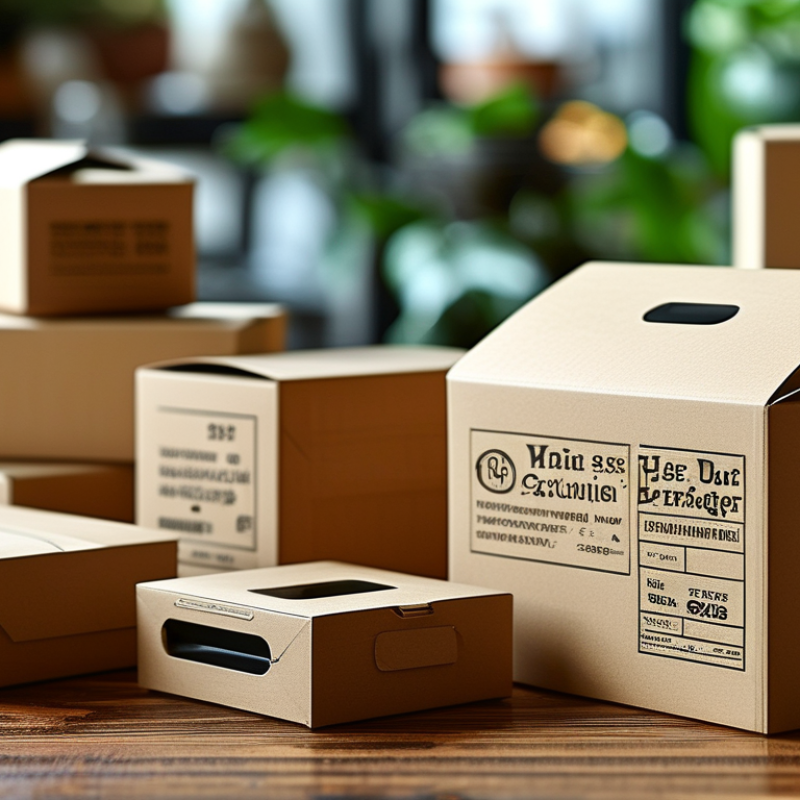
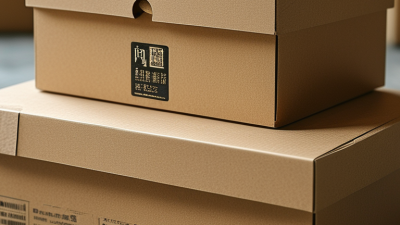
Custom printed shipping boxes are corrugated cartons designed with a seller’s artwork, measurements, and structural requirements.
They carry products through sorting centers, delivery vans, and sometimes rain-soaked doorsteps. The print identifies the parcel, but the box’s real job is controlled protection. A strong design limits movement, cushions corners, and fits the item without excessive void fill. That definition matters because attractive graphics cannot repair weak board.
Smithers’ report, The Future of E-Commerce Packaging to 2028, estimates this market at about $73 billion in 2023. It projects more than $100 billion by 2028, showing how shipping packaging has become a major commercial system.
Custom printing adds a second function. It turns a plain delivery surface into a repeatable customer touchpoint. A clear return message, handling instruction, or simple opening pattern can reduce confusion at home. Research from the Baymard Institute places average online-cart abandonment near 70 percent, although packaging alone cannot solve that problem. Still, a poor delivery experience can weaken trust after checkout.
In practice, the best box balances board strength, print coverage, dimensions, packing speed, and recycling compatibility. Testing should include drop impacts, compression, vibration, and humid storage. Do not trust a sample alone. Measure damage rates and packing time across real orders.
A smaller carton may lower material use, yet tight tolerances can slow fulfillment or crush fragile contents. The compromise is easy to miss. The box is not magic. U.S. Environmental Protection Agency data recorded 82.2 million tons of containers and packaging in municipal waste in 2018, with about 54 percent recycled. That figure makes material choices worth examining, not merely decorating.
A custom shipping box should match the product, not merely the logo. The 2023 Global Parcel Shipping Index recorded 161.8 billion parcels worldwide in 2022. That volume means packages face repeated sorting, stacking, vibration, and sudden drops. Box style matters here. Regular slotted cartons suit many products, while full-overlap styles protect heavier items and exposed edges. Mailer boxes work well for compact products, but their folding panels may need stronger board.
Board grade controls stiffness, while ECT estimates stacking resistance. A higher ECT rating can reduce crushing during warehouse storage. However, it does not automatically prevent punctures or moisture damage. For example, a 32 ECT carton may protect a light ceramic item better with internal spacing than a 44 ECT carton with poor fit. Small gaps create movement. Movement creates impact.
I usually match ECT to product weight, stacking height, shipping distance, and climate. Then I test a packed sample under ISTA 3A or ASTM distribution procedures. The result can be surprising. A box that survives a compression test may still fail at a corner after a drop. That is an important weakness in simple specifications. Recycled fiber content, humidity, and warehouse time can lower real-world strength. Measure the actual package, not only the board label. A practical design may use stronger edges, molded inserts, or shorter box dimensions instead of thicker material everywhere.
| Product Protection Need | Recommended Box Style | Typical Board Construction | Suggested Minimum ECT | Suitable Product Examples | Protection and Design Notes |
|---|---|---|---|---|---|
| Lightweight, non-fragile items | Regular Slotted Carton (RSC) | Single-wall E-flute or B-flute corrugated board | 23–32 ECT | Apparel, books, stationery, soft goods | Use a snug fit to reduce movement. E-flute offers a smoother printable surface; B-flute provides more economical stacking strength. |
| Moderate handling and stacking loads | RSC or mailer-style tuck box | Single-wall B-flute or C-flute corrugated board | 32 ECT | Shoes, household goods, subscription products | C-flute is thicker than B-flute and generally provides more cushioning. Add paper or molded inserts when empty space is present. |
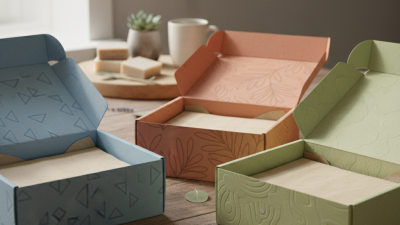
| Retail presentation with moderate protection | Five-Panel Folder or Roll-End Tuck-Top Mailer | E-flute or B-flute single-wall board | 23–32 ECT | Cosmetics, gift sets, small electronics accessories | Tuck-top designs improve opening experience and can reduce tape use. Use interior retention or cushioning for items that can shift. |
| Fragile products requiring cushioning | RSC with die-cut insert or protective mailer | Single-wall C-flute or double-wall BC-flute | 32–48 ECT | Glassware, ceramic items, small appliances | The insert should immobilize the product and maintain clearance from all box walls. Board strength alone cannot replace proper cushioning. |
| Heavy or dense products | Full Overlap Carton or reinforced RSC | Heavy-duty single-wall or double-wall BC-flute board | 44–51 ECT | Tools, cookware, hardware, dense packaged goods | Full-overlap flaps distribute compression across the top and bottom. Reinforce seams and confirm the package weight is appropriate for manual handling. |
| High stacking or long-distance shipment | Double-wall RSC or full-overlap carton | Double-wall BC-flute or EB-flute board | 48–61 ECT | Bulk products, industrial components, multi-pack shipments | Double-wall construction increases compression and puncture resistance. Keep box dimensions compact to reduce panel bending and product movement. |
| Moisture-prone distribution conditions | RSC with protective inner packaging | Moisture-resistant treated corrugated board, selected for the required strength | 32–51 ECT | Beverage accessories, outdoor goods, seasonal products | Humidity can reduce corrugated strength. Use liners, sealed inner packaging, or coatings where appropriate; coatings do not make a box waterproof. |
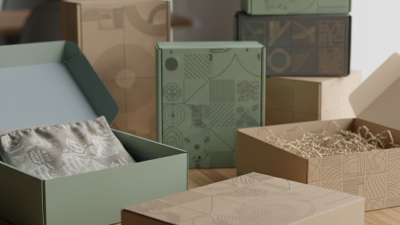
| Premium custom-printed presentation | Separate printed sleeve or litho-laminated mailer | E-flute or B-flute corrugated board with a printable outer liner | 23–32 ECT | Gift packaging, direct-to-consumer products, promotional kits | A separate printed sleeve can improve graphics while preserving a stronger shipping carton underneath. Protect high-contact areas with a suitable coating or varnish. |
Selection note: ECT values are general starting points, not a universal box-strength specification. Final selection should consider product weight, box dimensions, stacking height, shipping distance, humidity, cushioning, and closure method. Validate the complete package with distribution testing before production.
The best printing method depends on your order size, artwork, budget, and delivery goals.
Flexographic printing uses plates to transfer ink onto corrugated board. It works efficiently for larger runs and simple designs, such as one-color logos or bold shipping instructions. The ink can appear slightly less detailed on rough kraft surfaces, though this is often acceptable for practical packaging.
Digital printing sends artwork directly to the box surface, without printing plates. It suits short runs, seasonal campaigns, and designs with names, photographs, or changing graphics. Colors can look sharp, but large orders may cost more per box.
Lithographic printing creates highly detailed images on a smooth paper sheet, which is then mounted onto corrugated board. It offers strong color control and premium shelf appeal. However, it adds production steps and may not suit a basic shipping carton.
In real projects, digital printing often feels flexible, while lithographic printing rewards careful planning. I have also seen color expectations fail when screens, proofs, and final boards differ.
Tips: Request physical samples before approving production. Compare the same artwork across all three methods. Check small text, dark color blocks, barcode readability, and edge alignment. Ask how colors will be measured, not only how they will look on screen. Consider box storage too. A beautiful printed box is less useful if moisture, stacking, or rough handling damages it. Be practical. Your first choice may need revision.
What Are the Best Custom Printed Shipping Boxes?
The best custom printed shipping box protects the product before it promotes the product. Bright graphics cannot prevent crushed corners, panel buckling, or movement inside the carton. Box design should match product weight, dimensions, closure method, and the expected parcel network. A few millimeters can change how a package behaves during handling.
ISTA 3A testing helps validate parcel performance under realistic distribution stresses. The procedure may include drops, vibration, compression, and atmospheric conditioning. These tests examine the packaged product as a complete system. They can reveal damage that looks unlikely during a simple warehouse inspection. For example, a box may survive a short drop but fail after repeated vibration loosens the internal fit.
Testing should begin with a documented sample. Record board grade, box dimensions, print coverage, inserts, tape, and product orientation. Use production-intent packaging, not a carefully reinforced prototype. That difference matters. A qualified laboratory can follow the applicable ISTA 3A sequence and report visible damage, functional failure, and packaging changes. Review the results against real shipment data when possible. Test outcomes are valuable, but they are not perfect predictions. Humidity, carrier handling, and seasonal loading can still vary. I would also question attractive designs that require excessive ink coverage or complex assembly. They may increase cost without improving protection. The strongest box is usually the one that balances appearance, repeatable production, and verified parcel performance.
What Are the Best Custom Printed Shipping Boxes?
A strong custom shipping box must protect the product and support responsible disposal. Corrugated cardboard remains practical because it is lightweight, stackable, and widely accepted in recycling systems. The U.S. Environmental Protection Agency reports a 96.5% recovery rate for corrugated containers. This figure is encouraging, but it needs careful interpretation. Recovery means material was collected for recycling, not that every box became a new box.
When selecting printed packaging, ask about recycled content, fiber sourcing, inks, and adhesives. Water-based inks can reduce concerns during recycling, while excessive coatings may complicate processing. Keep printing limited to useful information, such as handling instructions and recycling guidance. A clean, readable design often works better than heavy coverage. The box should also fit closely around the product. Extra space increases filler use and may weaken performance during shipping.
Practical testing still matters. Drop tests, compression checks, and moisture exposure can reveal problems that a specification sheet misses. A beautiful box that splits at the corners is not a sustainable solution. I have found that small design compromises can improve both durability and material efficiency. However, recovery rates differ by region, collection access, and contamination levels. That uncertainty deserves attention. Verify local recycling instructions, request material documentation, and avoid treating the 96.5% figure as a guarantee for every shipment.
Corrugated shipping boxes are a strong sustainability choice when they are designed for efficient material use and kept clean and dry for recycling. The U.S. EPA reported a 96.5% recovery rate for corrugated boxes; the remaining 3.5% represents the portion not recovered. Choosing right-sized boxes and recyclable paper-based materials can help reduce unnecessary packaging waste.
Source: U.S. Environmental Protection Agency, corrugated recovery rate data. The 3.5% figure is calculated as 100% minus the reported 96.5% recovery rate.