Corrugated shipping boxes are engineered paperboard containers made from fluted paper glued between liner sheets. They protect products during stacking, handling, and transport. The familiar brown box looks simple. Its structure is not.
The global corrugated packaging market continues expanding, according to Smithers’ industry report, The Future of Corrugated Packaging to 2029. E-commerce, food delivery, and industrial distribution remain important demand drivers. The report also highlights lighter materials, improved printing, and more efficient production. These changes affect how businesses select, design, and test corrugated shipping boxes.
Industry data also shows corrugated packaging’s strong recovery potential. The Fibre Box Association reports that corrugated packaging recycling in the United States remains above 90 percent in recent years. Actual recovery depends on collection systems, contamination, and local processing capacity. That detail matters. Recycling claims should not be treated as universal guarantees.
This guide explains common box types, including regular slotted containers, full-overlap boxes, double-wall boxes, and mailer-style designs. Each option behaves differently under pressure. A single-wall box may suit lightweight retail products. A double-wall structure offers greater protection for heavier goods or longer distribution routes.
However, box strength is not determined by appearance alone. Board grade, flute profile, moisture exposure, product weight, and stacking time all influence performance. Laboratory ratings help, but real shipments can behave differently. That is an inconvenient limitation.
Reliable packaging decisions combine supplier specifications, recognized testing methods, and practical transport experience. The best corrugated shipping boxes balance protection, material use, handling efficiency, and total cost. Sometimes, the cheapest box becomes the most expensive choice.
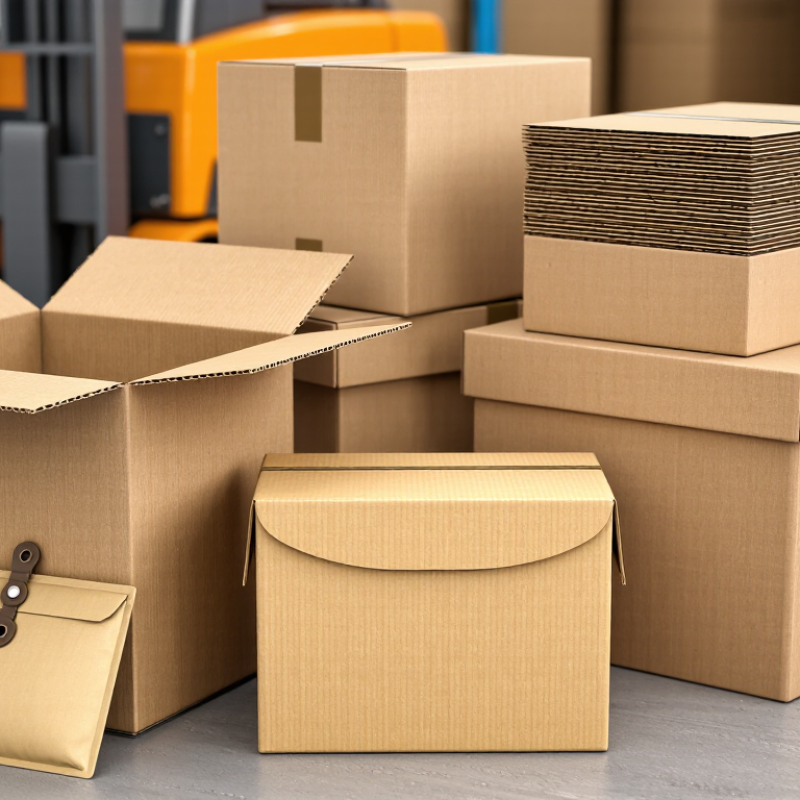
Corrugated shipping boxes are paper-based containers built for moving goods safely. They contain a fluted paper layer between one or two flat liner sheets. The flutes act like small springs. They absorb pressure, reduce crushing, and add stiffness without excessive weight. This structure differs from ordinary folding cartons, which usually use one flat paperboard layer.
Box strength depends on several details. Flute size affects cushioning and stacking performance. Larger flutes can protect fragile items, while smaller flutes create a smoother surface and tighter folds. Single-wall boxes suit many everyday shipments. Double-wall boxes use two fluted layers for heavier products or longer transport. Triple-wall designs provide greater resistance, but they may cost more and occupy extra storage space.
Shape also matters. Regular slotted boxes are common for general packing. Full-overlap styles offer stronger edges and better protection against rough handling. Die-cut boxes can fit unusual products closely, reducing movement inside. However, a stronger box cannot fix poor packing. Empty spaces may let products strike the walls repeatedly. Excessive filler can also create pressure points. A practical check is simple: place the packed box on a scale, inspect every seam, and shake it gently. I once underestimated moisture exposure during storage; the cardboard softened before shipment. Corrugated boxes resist impact well, but they still need dry storage and suitable internal protection.
Corrugated shipping boxes are made from a fluted paper layer bonded between linerboard sheets. Different flute profiles provide different combinations of thickness, cushioning, stacking strength, and printability.
Approximate board thickness: E-flute is commonly used for lightweight cartons and retail packaging, while B-, C-, A-, and BC-flute boards provide progressively greater cushioning and stacking strength.
Corrugated shipping boxes begin with corrugated board, a layered material designed to absorb pressure and protect goods. Its core is called the flute. The outer sheets are liners. Together, these layers create strength without excessive weight.
How Is Corrugated Board Made?
The process starts with paper fibers from wood pulp or recovered paper. The fibers are mixed with water, cleaned, and formed into wide paper sheets. Large heated rollers remove moisture and improve surface strength. The paper must remain flexible. If it becomes too dry, it may crack during shaping.
Next, a corrugating machine passes one paper sheet between heated rolls. These rolls form the familiar wave pattern. Adhesive is applied to the flute tips. A liner is pressed against them and bonded into a single-wall board. Heavier packaging may use two fluted layers and three liners. This creates double-wall or triple-wall board.
Temperature, moisture, pressure, and adhesive coverage all affect the final result. Small changes can influence box compression and bending resistance. Moisture matters. Too much can soften the board. Too little can make it brittle.
Different flute sizes suit different needs. Fine flutes provide a smoother printing surface and moderate cushioning. Larger flutes offer stronger shock absorption and stacking support. After bonding, the board is cut, creased, and folded into box blanks. The process appears highly controlled, but it is not perfectly uniform. Fiber quality and humidity can still create small variations that packaging teams must inspect and adjust.
| Data Dimension | Item or Type | Structure or Manufacturing Detail | Main Characteristics | Typical Uses |
|---|---|---|---|---|
| Basic Definition | Corrugated Board | A composite paperboard material made from one or more flat liner sheets bonded to a fluted corrugated medium. | Lightweight, recyclable, stackable, printable, and capable of providing cushioning and compression strength. | Shipping cartons, protective packaging, product displays, and partitions. |
| Board Construction | Single-Face Board | One flat liner is bonded to one fluted medium. | Flexible and suitable for wrapping, cushioning, and surface protection; generally not used alone for heavy-duty shipping cartons. | Protective wrapping, inner padding, and lightweight packaging components. |
| Board Construction | Single-Wall Board | One fluted medium is bonded between two liner sheets. | The most common shipping-box construction; balances strength, weight, cost, and ease of conversion. | General-purpose cartons, mailers, retail packaging, and parcel shipping boxes. |
| Board Construction | Double-Wall Board | Two fluted mediums and three liner sheets are combined into one board. | Higher stacking strength, puncture resistance, and cushioning than single-wall board. | Heavy products, long-distance shipping, bulk packaging, and warehouse stacking. |
| Board Construction | Triple-Wall Board | Three fluted mediums are separated by four liner sheets. | Very high compression and impact resistance with greater thickness and weight. | Industrial containers, large heavy components, and demanding transport applications. |
| Flute Profile | A Flute | Typically about 4.0–5.0 mm high, with relatively large flutes. | Strong cushioning and good stacking performance; provides a thicker board profile. | Fragile products, protective packaging, and boxes requiring impact absorption. |
| Flute Profile | B Flute | Typically about 2.5–3.0 mm high, with more flutes per unit length than A flute. | Good puncture resistance, improved printability, and efficient use of storage space. | Food cartons, retail packaging, die-cut boxes, and inner packaging. |
| Flute Profile | C Flute | Typically about 3.5–4.0 mm high and widely used for general shipping cartons. | Balanced cushioning, stacking strength, availability, and material efficiency. | General shipping boxes, household goods packaging, and e-commerce cartons. |
| Flute Profile | E Flute | Typically about 1.0–1.8 mm high, with a fine flute structure. | Smooth surface, good print quality, and relatively thin construction; offers less cushioning than larger flutes. | Retail boxes, cosmetic packaging, small-product cartons, and presentation packaging. |
| Flute Profile | F Flute | Typically about 0.6–0.9 mm high, with a very fine flute structure. | Thin, smooth, and suitable for detailed graphics and compact packaging formats. | Small retail cartons, specialty packaging, and products requiring a refined appearance. |
| Flute Combination | Double-Wall Combination | Two flute profiles are laminated together, such as a larger flute paired with a smaller flute. | Combines cushioning, rigidity, printability, and stacking strength in one board. | Heavy-duty shipping boxes, appliance packaging, and protective transport containers. |
| Paper Component | Linerboard | A flat paper sheet placed on the outside or between fluted layers. | Provides surface quality, tensile support, printability, and resistance to handling damage. | Outer and inner surfaces of corrugated cartons. |
| Paper Component | Corrugating Medium | Paper that is softened with heat and moisture, formed into flutes, and bonded to linerboard. | Creates the board’s thickness, cushioning effect, and resistance to crushing. | Central fluted layer in single-wall, double-wall, and triple-wall board. |
| Manufacturing Process | Paper Conditioning | Paper rolls are conditioned and fed into the corrugator, where controlled heat and moisture improve forming and bonding. | Helps maintain consistent flute shape, board flatness, and adhesive performance. | Initial stage of corrugated-board production. |
| Manufacturing Process | Flute Formation | The corrugating medium passes between heated rolls that press it into a regular wave pattern. | Determines the board’s thickness, cushioning, and part of its compression strength. | Production of A, B, C, E, F, and other flute profiles. |
| Manufacturing Process | Adhesive Application | Starch-based adhesive is applied to the flute tips before the medium is joined with linerboard. | Creates a strong bond while keeping the board relatively lightweight and recyclable. | Bonding the fluted medium to one or more liner sheets. |
| Manufacturing Process | Single-Facer Assembly | The fluted medium is bonded to one linerboard to create single-face web. | Forms the foundation for single-wall, double-wall, and triple-wall structures. | Intermediate production stage on a corrugator line. |
| Manufacturing Process | Double-Backer Bonding | A second linerboard is bonded to the exposed flute tips, producing single-wall corrugated board. | Creates a flat, rigid sheet suitable for converting into shipping boxes. | Standard single-wall carton production. |
| Manufacturing Process | Multi-Wall Lamination | Additional single-face webs and linerboards are bonded to create double-wall or triple-wall board. | Increases thickness, compression resistance, and protection for heavier loads. | Industrial and heavy-duty packaging. |
| Box Conversion | Cutting and Creasing | Flat corrugated sheets are cut and creased according to the box design. | Defines panels, flaps, fold lines, and final box dimensions. | Regular slotted cartons, die-cut boxes, trays, and mailers. |
| Box Conversion | Printing and Finishing | Graphics, handling symbols, product information, coatings, or labels may be applied before final assembly. | Improves identification, communication, appearance, and handling efficiency. | Retail cartons, branded-free shipping information, and transport labeling. |
| Performance Factor | Edge Crush Strength | The force required to crush a defined edge of corrugated board. | Often used to estimate stacking and compression performance of a box. | Box specification, quality control, and shipment design. |
| Performance Factor | Box Compression Strength | The maximum load a completed carton can withstand before significant failure or deformation. | Influenced by board grade, flute direction, box dimensions, moisture, and stacking conditions. | Warehouse storage, pallet stacking, and transport planning. |
| Sustainability | Recyclability | Corrugated packaging is primarily fiber-based and can commonly enter paper recycling systems when clean and dry. | Supports material recovery; wax coatings, heavy contamination, and certain mixed-material components may affect recyclability. | Shipping, storage, reuse, and fiber recovery applications. |
Corrugated shipping boxes use fluted paper between flat liner sheets. This structure creates cushioning, stacking strength, and moderate resistance to crushing. In practical packing tests, the box type often matters more than its appearance. A lightweight carton may look suitable but fail when stacked overnight.
Single-wall boxes contain one fluted layer and two liner sheets. They suit books, clothing, small tools, and other moderately heavy products.
Double-wall boxes use two fluted layers with three liners. They provide stronger sidewalls for appliances, glassware, and dense items.
Triple-wall boxes add another flute layer for unusually heavy or fragile shipments. They can protect industrial parts, but their extra weight increases handling and transport costs.
Corrugated boxes also differ by their closing and cutting styles.
Regular slotted cartons have four top flaps meeting near the center. They are efficient for warehouse packing and usually need tape.
Full-overlap cartons have flaps covering the entire top and bottom surfaces. This design improves compression resistance, especially for heavy contents.
Die-cut mailer boxes fold into shape without separate tape in many cases. They work well for compact products and provide a cleaner opening experience.
Flute size affects performance too. Larger flutes absorb more impact, while smaller flutes offer a smoother surface and better printing support. The choice is not always obvious. A stronger box can still fail if empty space allows the product to move. Fit, cushioning, moisture exposure, and stacking height deserve equal attention.
Corrugated shipping boxes combine paper liners with a fluted inner layer. Their box style determines handling, closure, and product access. The Regular Slotted Container remains common because its flaps meet neatly at the center. A Full Overlap box adds stronger end protection. Die-cut mailers use locking tabs and shaped panels, reducing tape and improving presentation.
Flute profiles change cushioning, print quality, and stacking strength. A-flute is thick and protective, while C-flute offers a practical balance for general shipping. B-flute uses a tighter wave, giving better crush resistance and a smoother surface. E-flute is thinner, so it suits retail packs and detailed graphics. F-flute is even finer. It feels almost like folded paperboard.
Double-wall boards combine profiles, such as BC-flute, for heavier products and longer transport routes.
However, thicker is not automatically better. A bulky board can increase shipping volume and waste. The right choice depends on product weight, drop height, pallet stacking, and humidity exposure.
The U.S. Environmental Protection Agency reported a 96.5% recycling rate for corrugated cardboard in 2018, representing about 33.3 million tons recycled. That figure supports corrugated packaging’s recovery value, but clean fiber still matters. Wet, food-contaminated, or heavily laminated boxes may be harder to process. Packaging engineers should test actual loads, not rely only on flute labels. Sometimes, our first specification is simply too conservative.
Corrugated shipping boxes use a fluted paper layer between flat liners. The structure adds stiffness without making the package unnecessarily heavy. Common types include single-wall, double-wall, and triple-wall boxes. Single-wall cartons fit books, clothing, and other light products. Double-wall cartons offer stronger protection for heavier items or longer routes. Triple-wall cartons serve very heavy loads, but they cost more and need more storage space.
Choose the box around the product, not around a convenient shelf size. Measure length, width, and height after adding protective padding. Leave enough room for cushioning, but avoid a large empty cavity. Excess space lets products move and increases impact damage. Check the packed weight against the box’s rated capacity. For glass, electronics, or sharp-edged parts, use stronger walls and internal dividers. In damp warehouses, consider moisture-resistant board and keep cartons off concrete floors. Ask for edge crush and burst test data when shipment risk is high. Those figures are useful, though they cannot replace a real packing trial.
Test the finished package with controlled drops, vibration, and stacking pressure. Inspect crushed corners, shifted padding, and broken seals afterward. A box can look strong and still fail at its weakest seam. My practical mistake was choosing extra strength before checking fit. That decision increased material use without improving protection. A perfect box does not exist. Recheck the design when the product or delivery route changes.